Last night, I got to see the original South Korean musical Maybe Happy Ending at the Orpheum Theatre in Minneapolis, and honestly, I wasn't quite sure what to expect. Going in, I knew none of the music and only had a simple synopsis: it's about futuristic "Helperbots" navigating retirement and maybe even falling in love. Broadway shows, at least in my head, are known for having some of the most specific and random storylines imaginable, and this one seemed to fit that category perfectly.
What immediately intrigued me, though, was that Maybe Happy Ending isn't based on a movie, book, or pre-existing franchise. It's simply its own story, which feels increasingly rare in today's world of entertainment. Originally released in South Korea in 2016, the musical was written and composed by Hue Park and Will Aronson and premiered in Seoul before eventually making its way to the United States. An English-language production debuted in Atlanta in early 2020, and the show finally arrived on Broadway in 2024. Since then, it's picked up an impressive six Tony Awards, including Best Musical last year.
With all that out of the way, let's talk about the actual show.
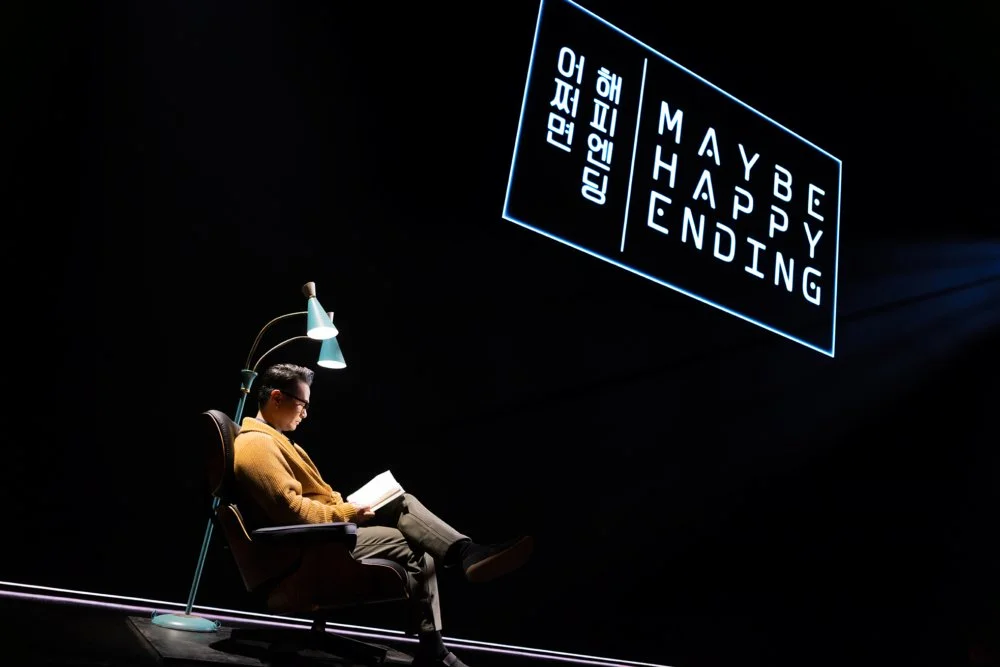
Before it even started, my friend and I were flipping through our (sadly non-Playbill) program when we noticed something I'd never seen before. There was already an actor sitting onstage reading a book. It was such a small touch, but it immediately pulled me into the world of the show.
It's also worth mentioning that Maybe Happy Ending is shorter than most Broadway musicals, running about an hour and 40 minutes with no intermission. That creates a different rhythm than what audiences might be used to. There's no built-in pause or reset point. Instead, the story moves continuously, which ultimately works in its favor.
When the lights went down and the production officially began, I was instantly hooked. The stage design was unlike anything I've seen in a Broadway touring production before. I'm honestly not going to do a great job explaining it, but it was a combination of screens, projections, moving rooms, and constantly shifting environments that felt cinematic. Every few scenes seemed to reveal a new surprise. It was one of those productions where I constantly found myself wondering, "How did they do that?"
Photos via Broadway Across America
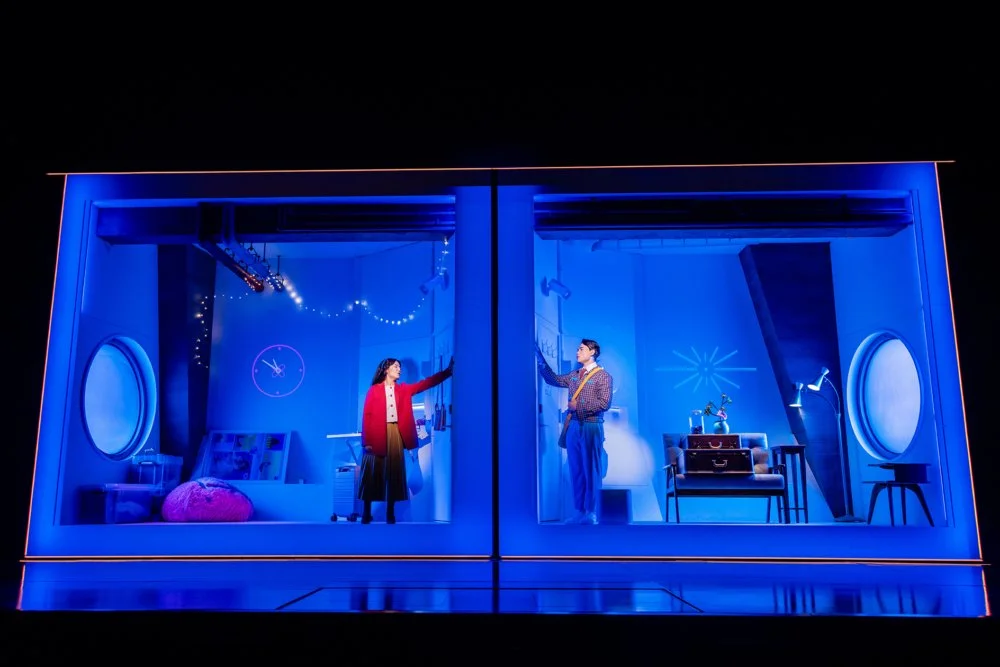

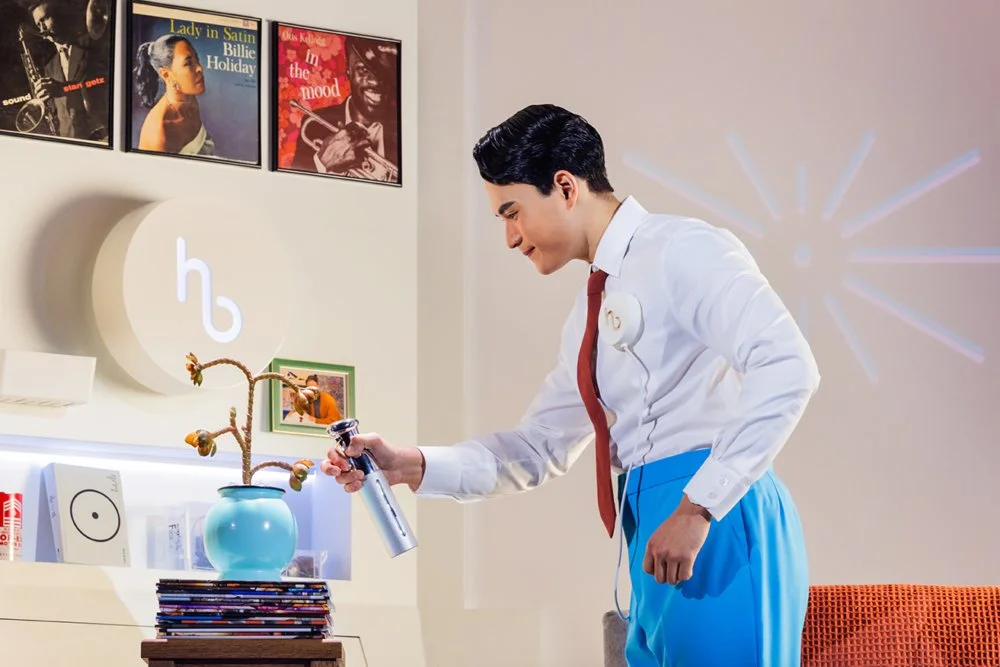
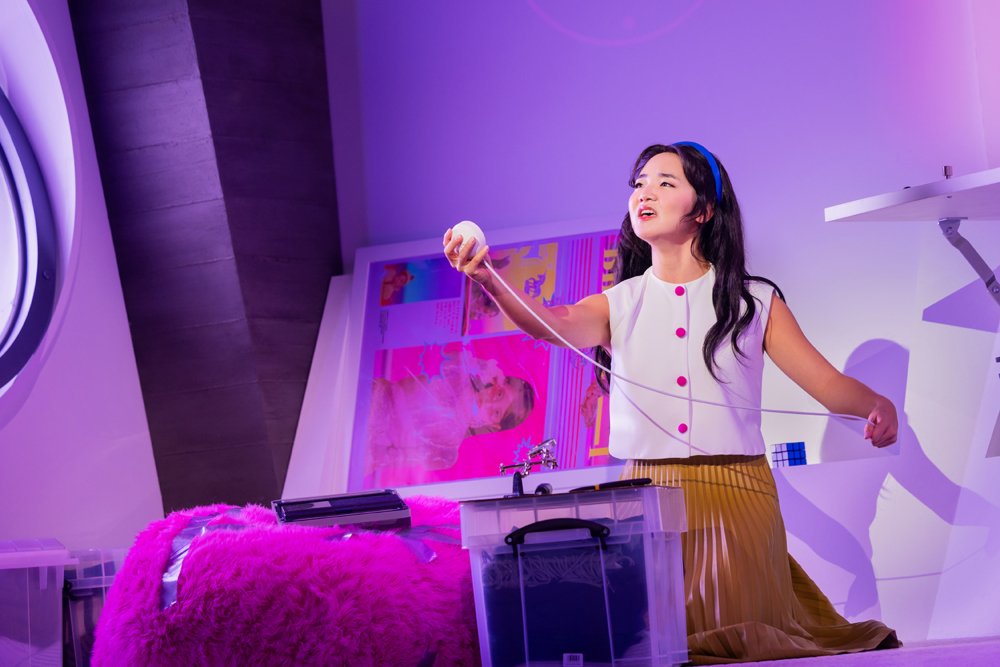
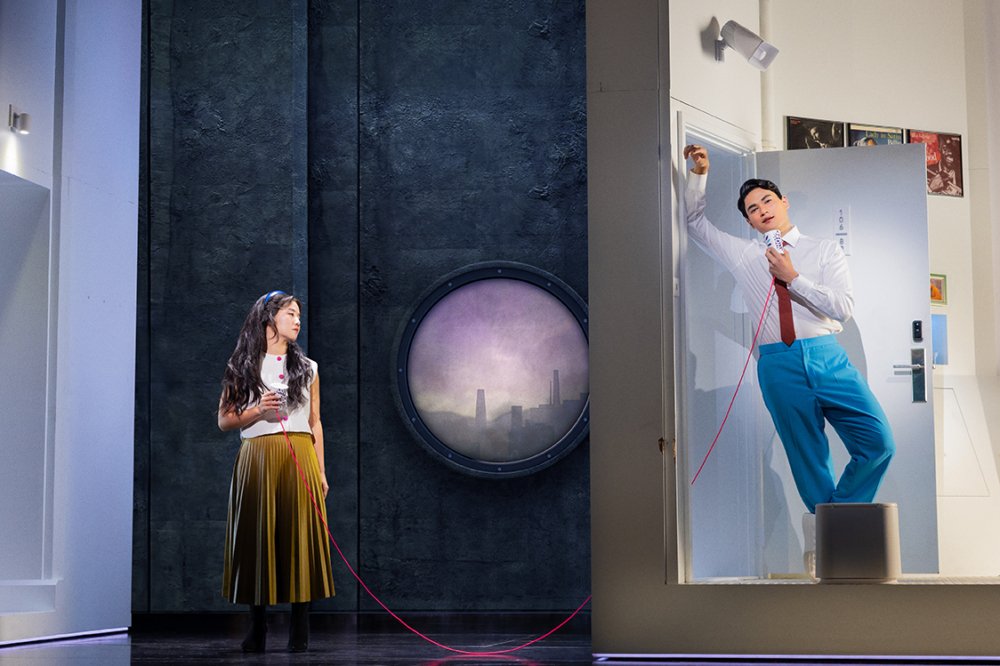
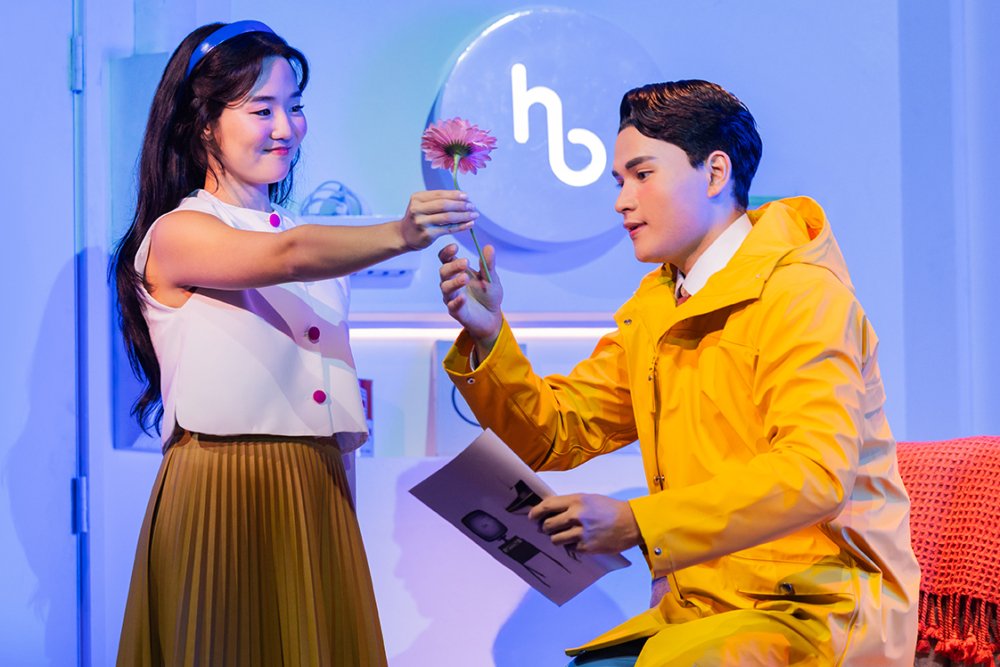
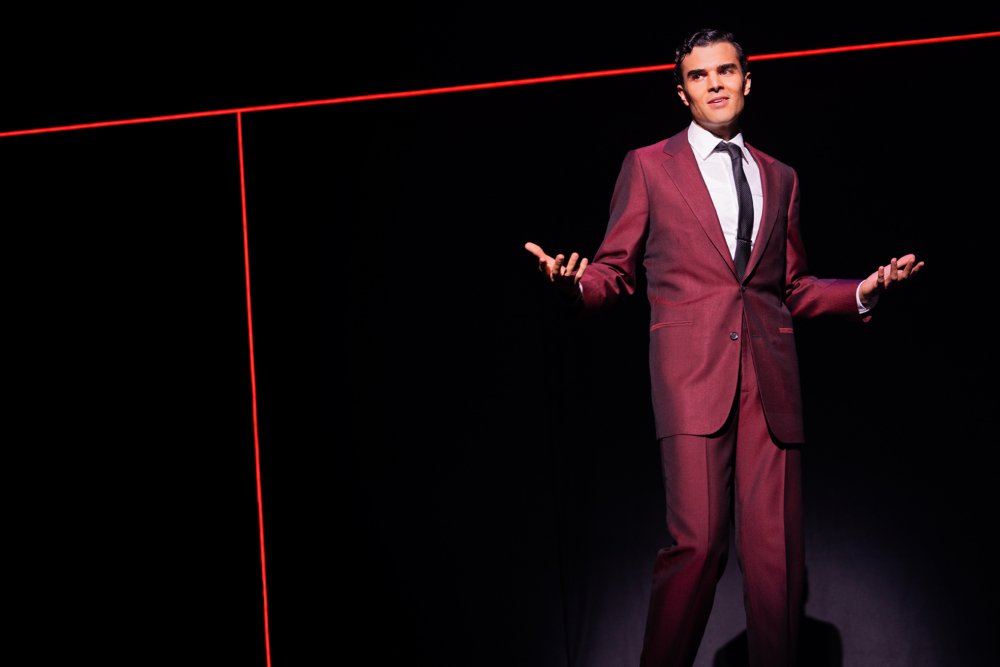
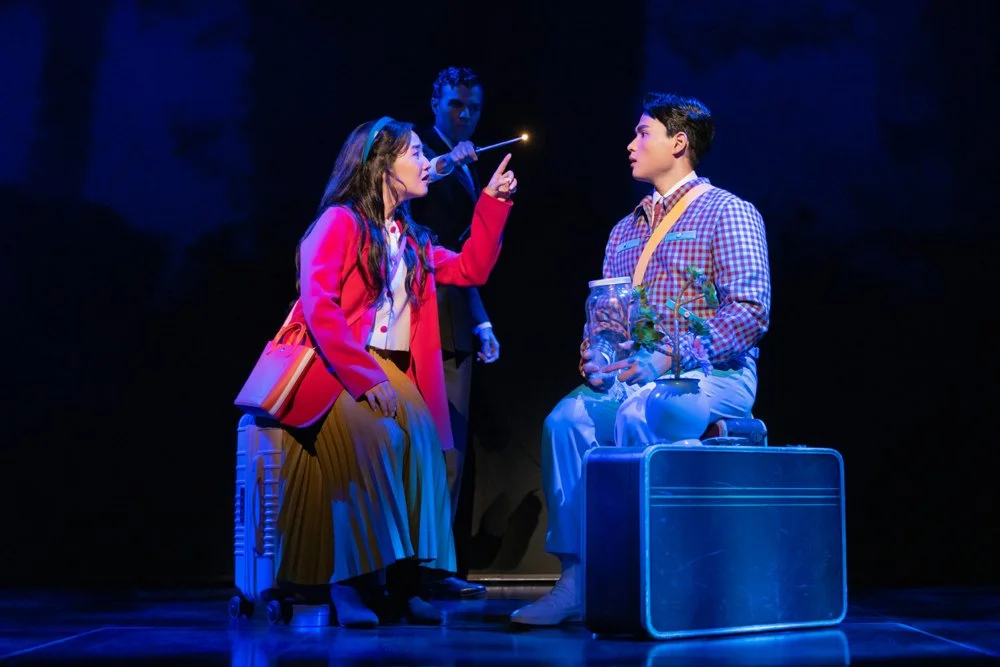
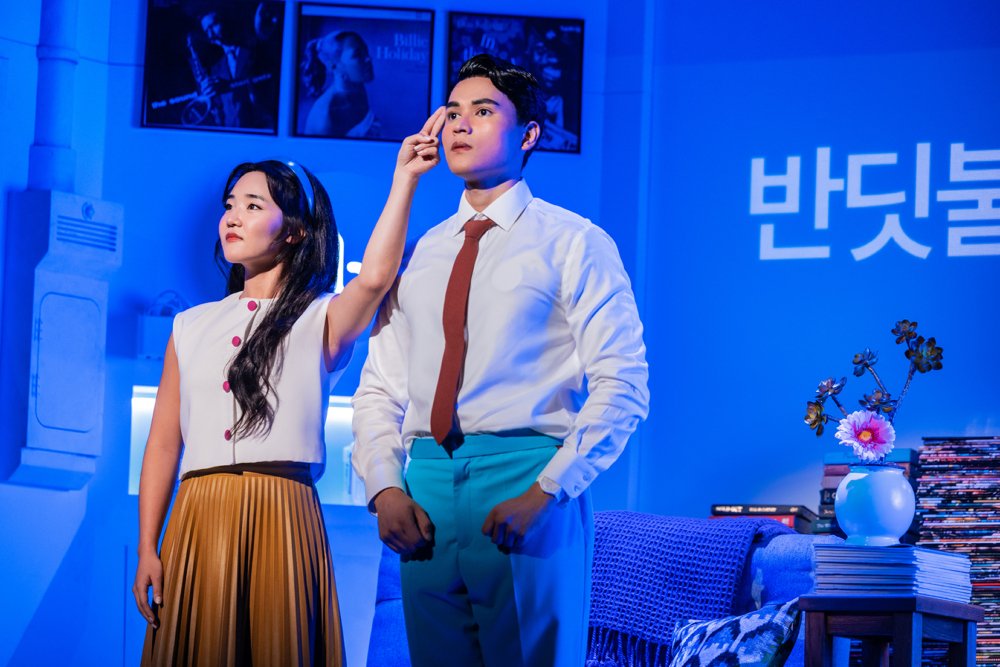
The story primarily centers on two retired Helperbots, Oliver and Claire. While there are a few other characters, they have minimal stage time compared to the show's central duo. Steven Huynh as Oliver and Claire Kwon as Claire carry the vast majority of the production, and they do so effortlessly. Both performers were also part of the original Broadway cast, and that chemistry was evident from the moment they stepped onstage.
Oliver and Claire live in the "Yards," a residential compound for retired Helperbots. Without getting too deep into spoiler territory, Claire unexpectedly knocks on Oliver's door when her charger breaks and she needs to borrow his. For Helperbots, their lives literally depend on their chargers. For someone like Oliver, who rarely leaves his apartment and seems perfectly content avoiding interaction altogether, this is a major disruption. What follows is the gradual development of a relationship that takes both characters on a beautiful, funny, and surprisingly heartbreaking journey.
One of the show's greatest strengths is the way it explores deeply human questions through characters who technically aren't human at all. It tackles what it means to be alive, to love someone, to experience loss, and to find purpose, all without ever feeling overly heavy-handed. And I truly cannot overstate how incredible the stage production was. The set design alone had me completely locked in for the entire runtime. I want to say more, but I genuinely think the surprise factor is part of what makes it so special. I'll just say this: fireflies.
While none of the songs immediately jumped out to me as future Broadway favorites I'll have on repeat, they didn't need to. The music serves the story rather than overshadows it, and the characters, world-building, and emotional core more than make up for anything the score lacks in standout moments. By the end, I found myself far more invested in these two Helperbots than I ever expected.
All I have to say is that Maybe Happy Ending absolutely deserves a spot on your must-see list. It's imaginative, heartfelt, visually stunning, and a reminder that even the most unconventional premise can tell a deeply universal story.
Photos by Matthew Murphy & Evan Zimmerman