
Pagliacci at Ordway Gave Sorrowful Laughs
Pagliacci at Minnesota Opera-
There's something that happens when you walk into your first opera (and this was mine!). You show up with expectations built from YouTube clips and secondhand stories, knowing it'll be impressive but not really knowing how impressive. I walked into Minnesota Opera's opening night of Pagliacci at the Ordway with a singing background, a genuine respect for the preparation that goes into performing at this level, and zero frame of reference for what a live opera actually feels like. I did not expect to leave feeling the way I did though.
The lobby of the Ordway was buzzing before the curtain even opened. The crowd spanned generations, older teens discovering something new, sitting alongside patrons who had clearly devoted decades to this art form, and the energy between them was real. Programs were handed out at the theater doors, packed with info about upcoming productions that I've already started looking into myself. Staff and ushers were warm and easy to find, and helped me, embarrassingly, find the seat that was right in front of me. Above the curtain, a projector cycled through sponsor acknowledgments before becoming what would be an invaluable resource all night: the English subtitles. For most of the pre-show, though, I was honestly just looking up at the architecture. Some venues earn their reputation by simply existing, and this was a very pretty theater!
General Director Ryan Taylor gave brief opening remarks, welcoming the crowd, framing what was ahead, issuing the appropriate emotional warnings, and thanking Minnesota voters for recent environmental legislation that benefits the organization directly. It was a grounded moment before a very human story, and nice to see the community outreach. Then the lights shifted, and the night really started.
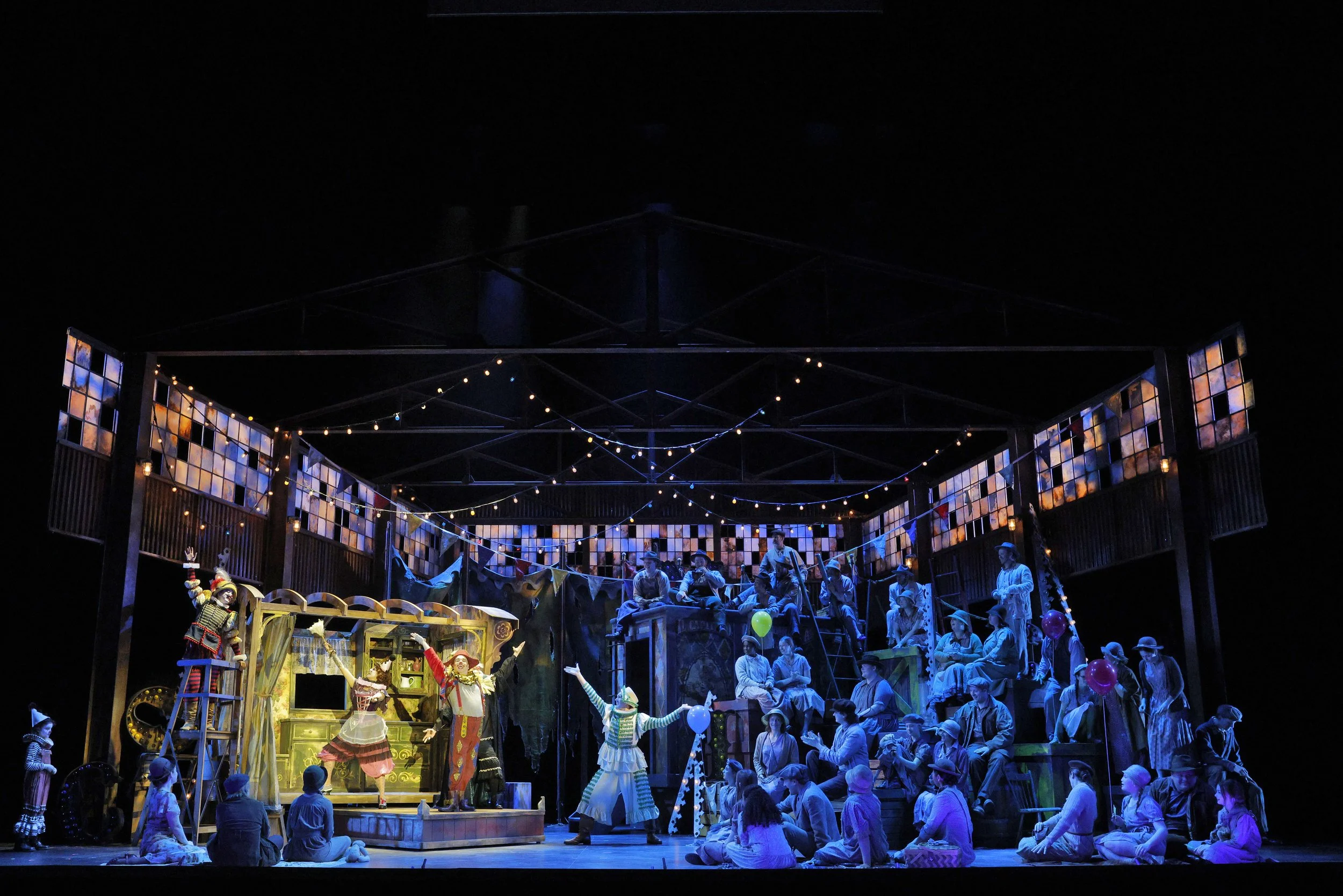
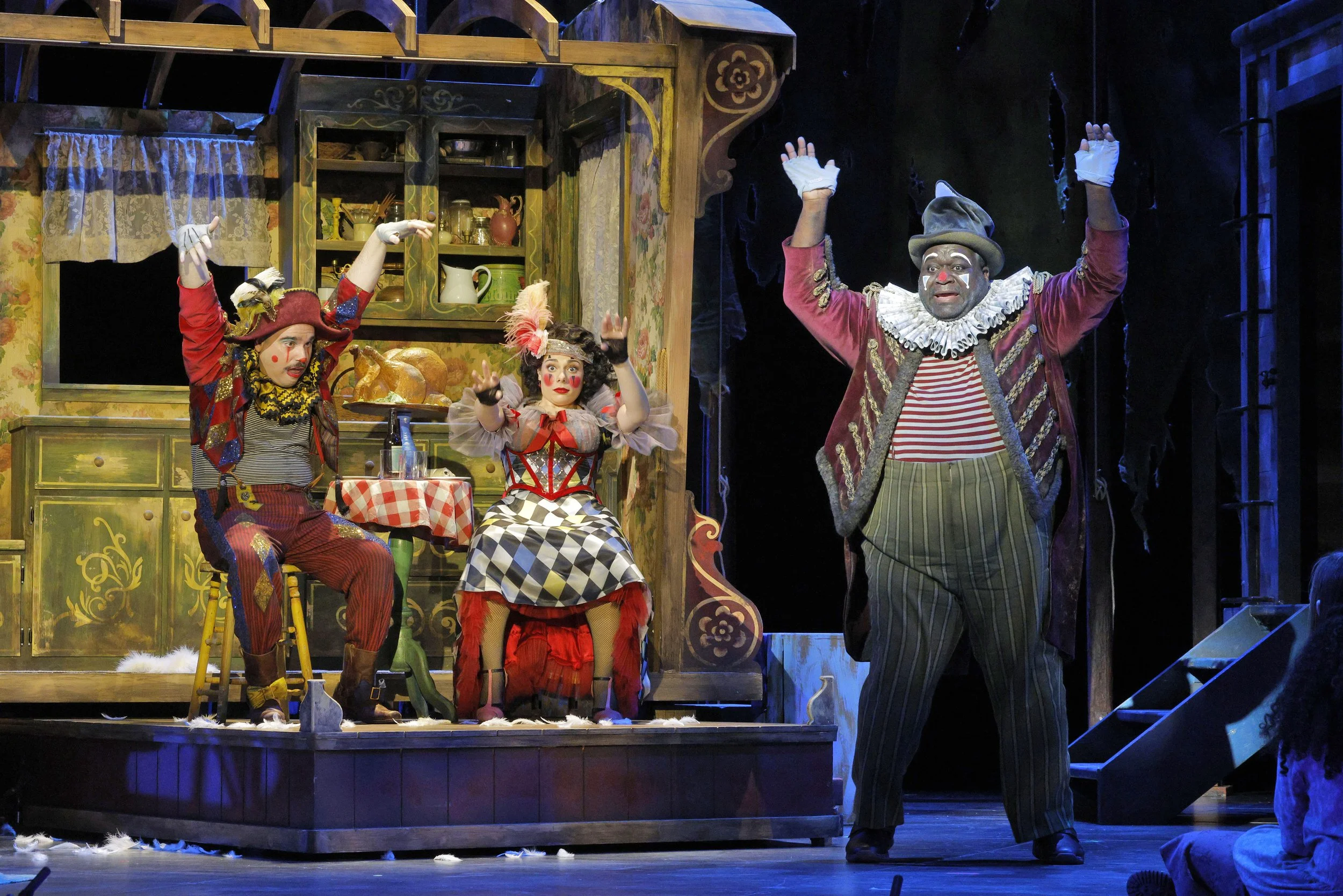
The set was smartly put together. One stage, no revolving platforms, no sweeping scene changes, but deeply lived-in. The traveling troupe's world was built from caravans, kitchen areas, and storage crates spread across a space that the cast used with real intention. Letters spelling out C-O-M-I-C-A were scattered across the stage and lit up at key moments in this teal and orange palette that felt almost cinematic. You hardly noticed them till they lit up, revealing another layer to the scene, similar to a stained glass backdrop and hanging lights that appeared and disappeared throughout, adding warmth exactly when the story called for it. The lighting overall was never going for naturalism; performers were always lit and visible, but that was clearly never the point. The colors were doing the storytelling. Shifts were so gradual that you'd suddenly realize the stage had gone cool and blue without knowing exactly when it happened. During the lighter carnival moments, the palette bounced between warm shades that genuinely felt festive. It was just really thoughtful work across the board, and something that dded complexity without overreaching.
Tonio's prologue hit right away. Baritone Reginald Smith Jr. commanded the stage from his first moments, and the silence that followed was one of those rare collective audience things, that stunned, held-breath quiet that shows awe, before applause almost involuntarily broke through. Looking back on the whole night now, the prologue reads almost like a guilt-ridden flashback rather than a straightforward theatrical introduction, which is fun in retrospect. By the final scene, that framing made a lot of sense to me. Whether that's the intended reading or my own interpretation, it's the kind of thing that makes a production actually stick with you.
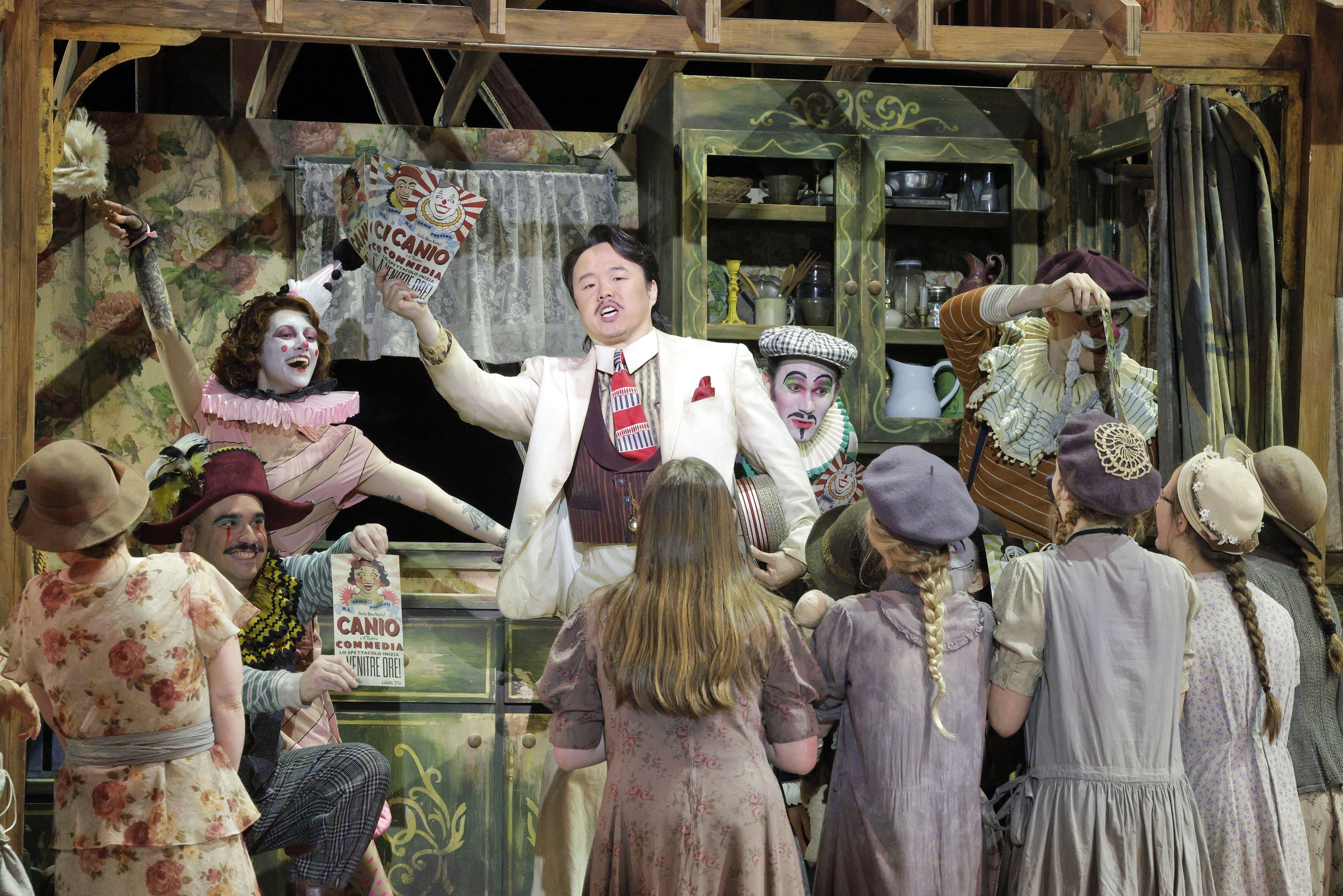
The production committed to Pagliacci's central idea, that these are real people and what you're watching isn't a performance but actual life. The world onstage felt believable and inhabited from the start. Won Whi Choi entered as Canio with something close to swagger, an almost untouchable quality reinforced by a crisp white costume and sunglasses that read immediately as a man who knows he's a legend among these people. Nedda, played by soprano Amanda Batista, was stunning from the jump, clearly someone anyone would eye, but the careful way she managed Canio and the tenderness she showed toward the troupe's child signaled right away that this was a woman navigating a very small and very dangerous world. The chemistry between the leads felt real. So did the unspoken bond between Tonio and Canio, or rather their unspoken rivalry, and the troupe's collective warmth toward one another. A lot of small pantomimed moments between bigger scenes and little asides built the world quietly and well.
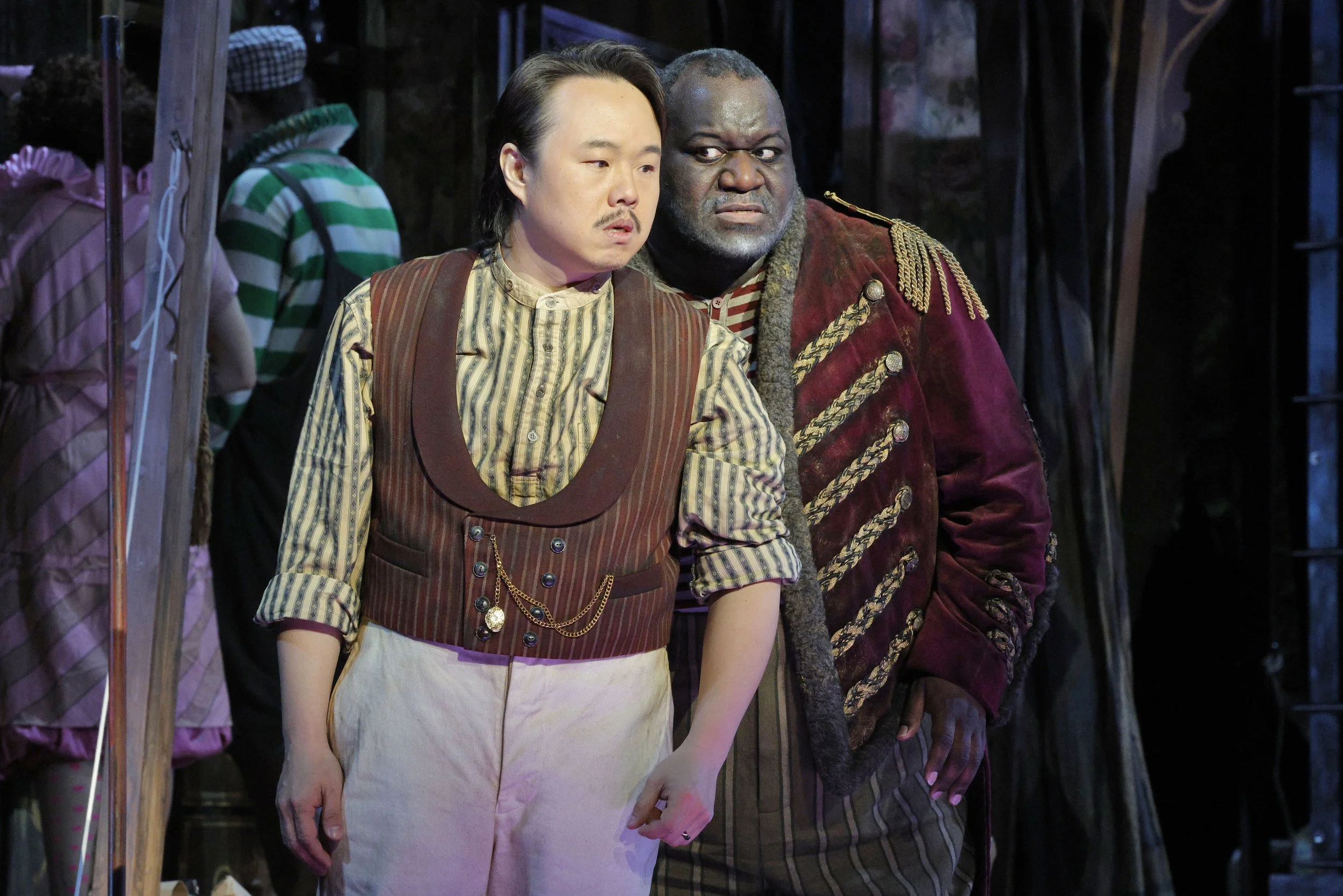
The tension in the first act built naturally from there. One of the most memorable staging choices was when Tonio lurked at the edge of the stage, watching Nedda and Silvio after his failed confession and attack on Nedda, half his face lit and half lost in shadow. Depending on where you were sitting in the audience, you might not have even seen him. That kind of staging makes you wonder how much of what unfolds we actually witness, and how much we only piece together after the fact. I think it’s pretty neat that had you been, say, 8 seats to my left, you would not have even seen Tonio, adding to the layer of “how did he know?”.
Nedda's solo Stridono lassù was an early high point. Batista's diction was exceptional, every consonant, every rolled R, every crisp T felt deliberate at a level you don't often get to hear up close. Her range was impressive too, reaching into genuinely low alto territory that felt almost surprising coming from a soprano. But what really stayed with me throughout her whole performance was her eyes. They were completely alive and specific the entire time, communicating things in a way that was reinforcing every lyric shown on screen.
Smith's Tonio deepened as the act went on. His performance of So ben che difforme, contorto son io balanced softness and swelling power in a way that kept you somewhere between sympathy and unease, which is the exact tightrope Tonio has to walk the whole night. When he was lurking, watching, quietly maneuvering, you felt the threat without it ever being spelled out. The image of him, half visible in shadow, watching Nedda and Silvio is one I keep coming back to. It was just such a great indirect danger.
If there was a weak point in the production, however, in my opinion, it was the Silvio and Nedda scenes. Their connection felt implied rather than built, and for a traveling troupe, the logistics of how they even came to know each other well enough to be in love were left entirely to the imagination. The performances were absolutely great, but Silvio read more as a plot mechanism than a full established person like the rest of the characters. In a production that had great depth everywhere else, that thinness stood out a little to me, but that’s just me!
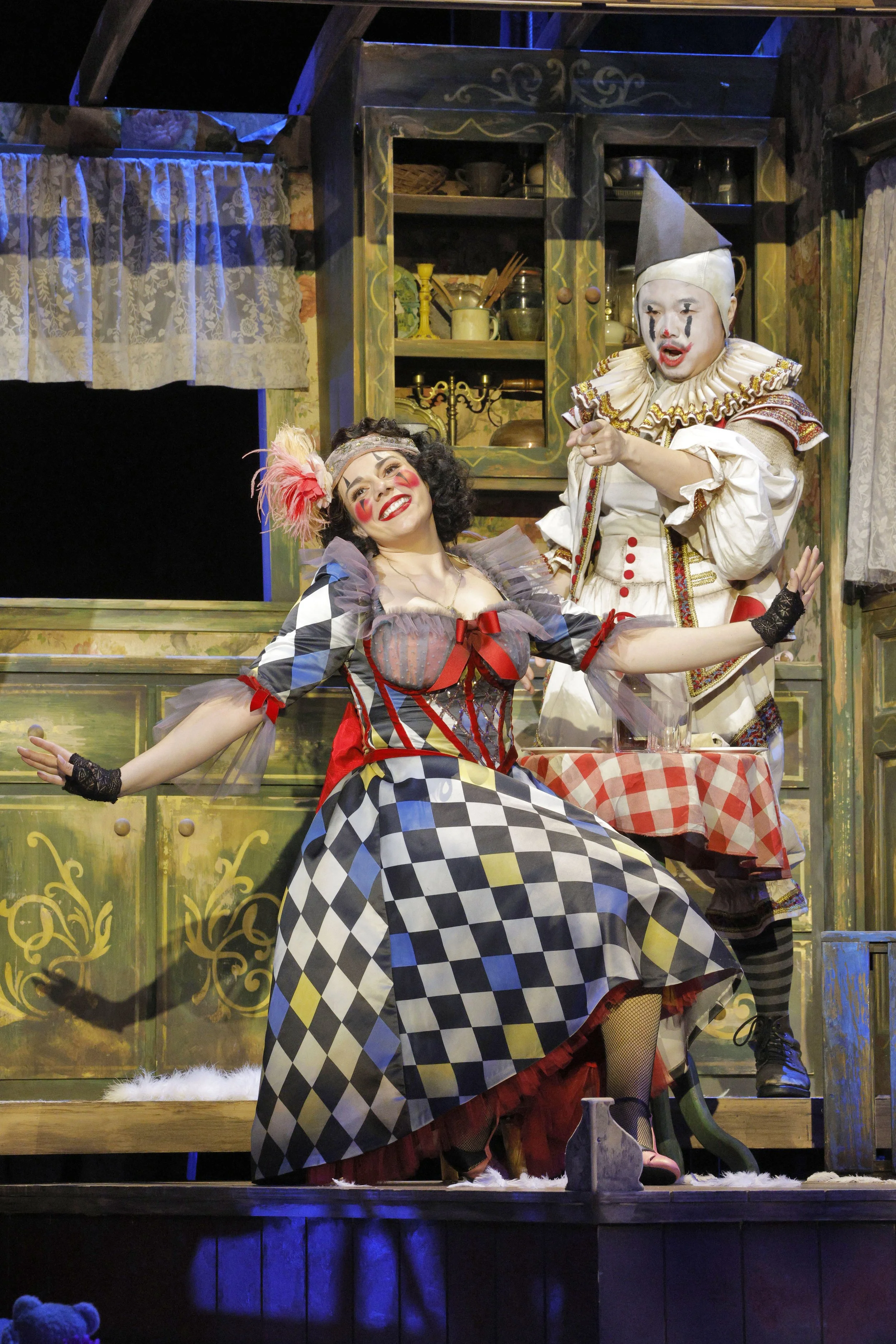
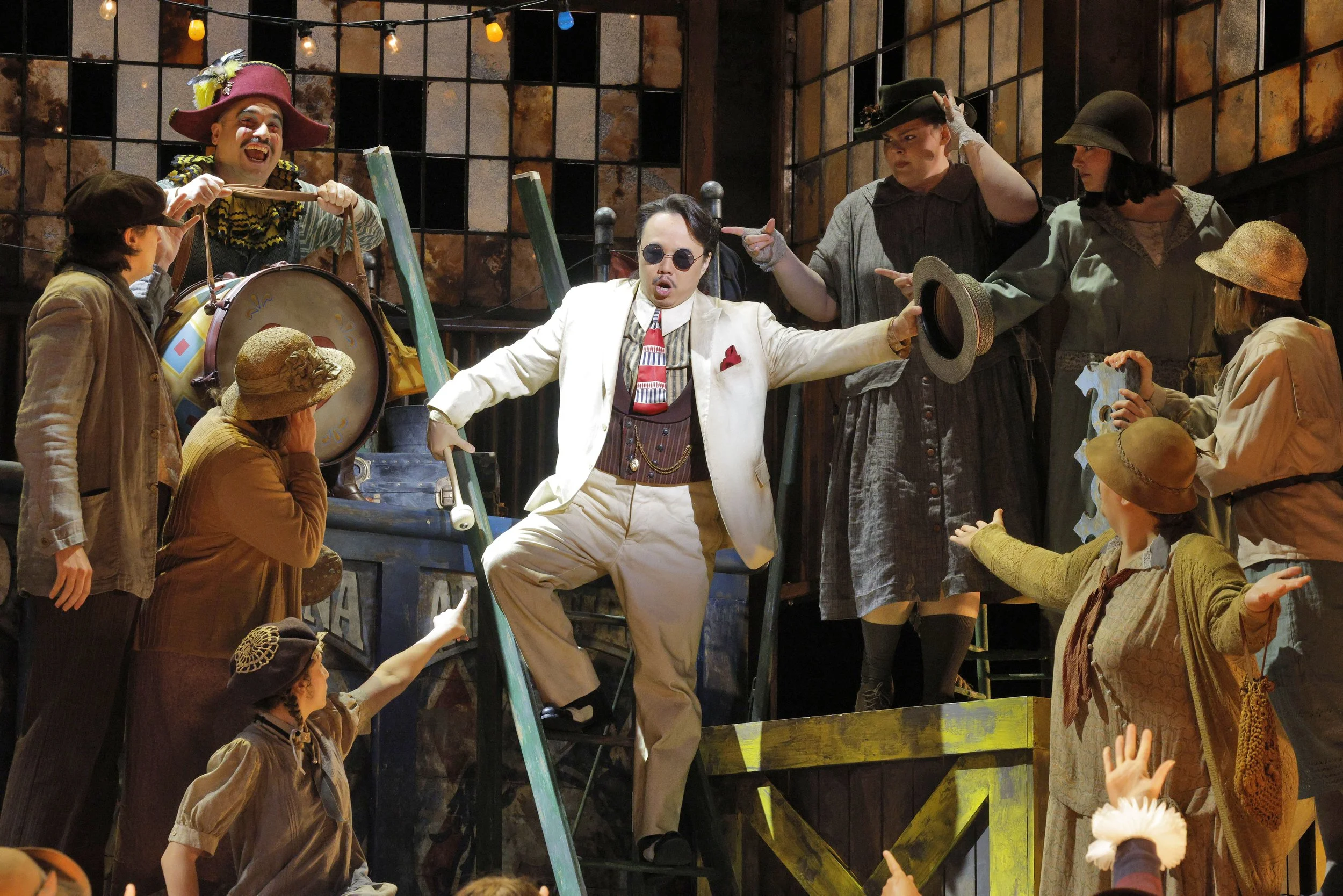
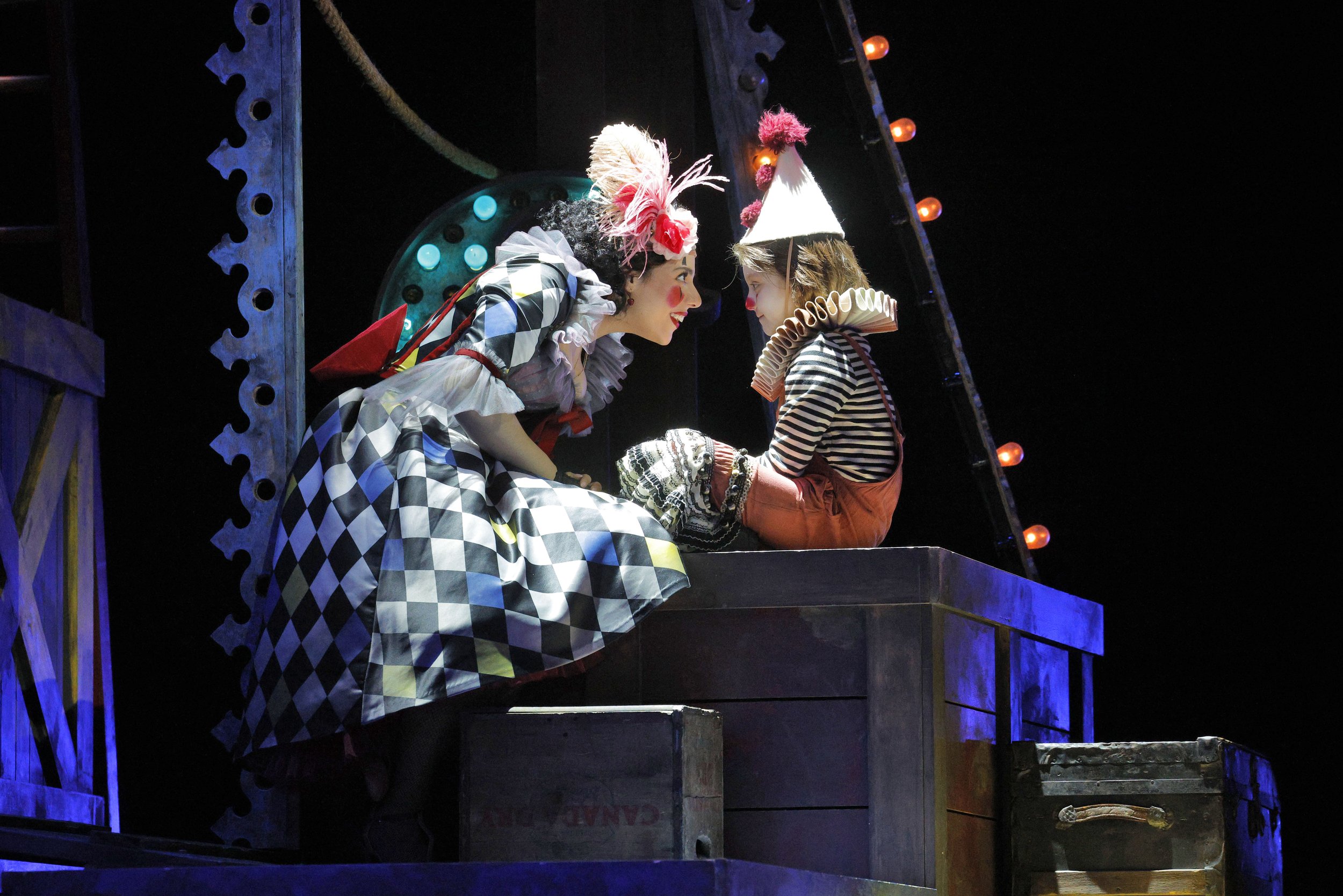
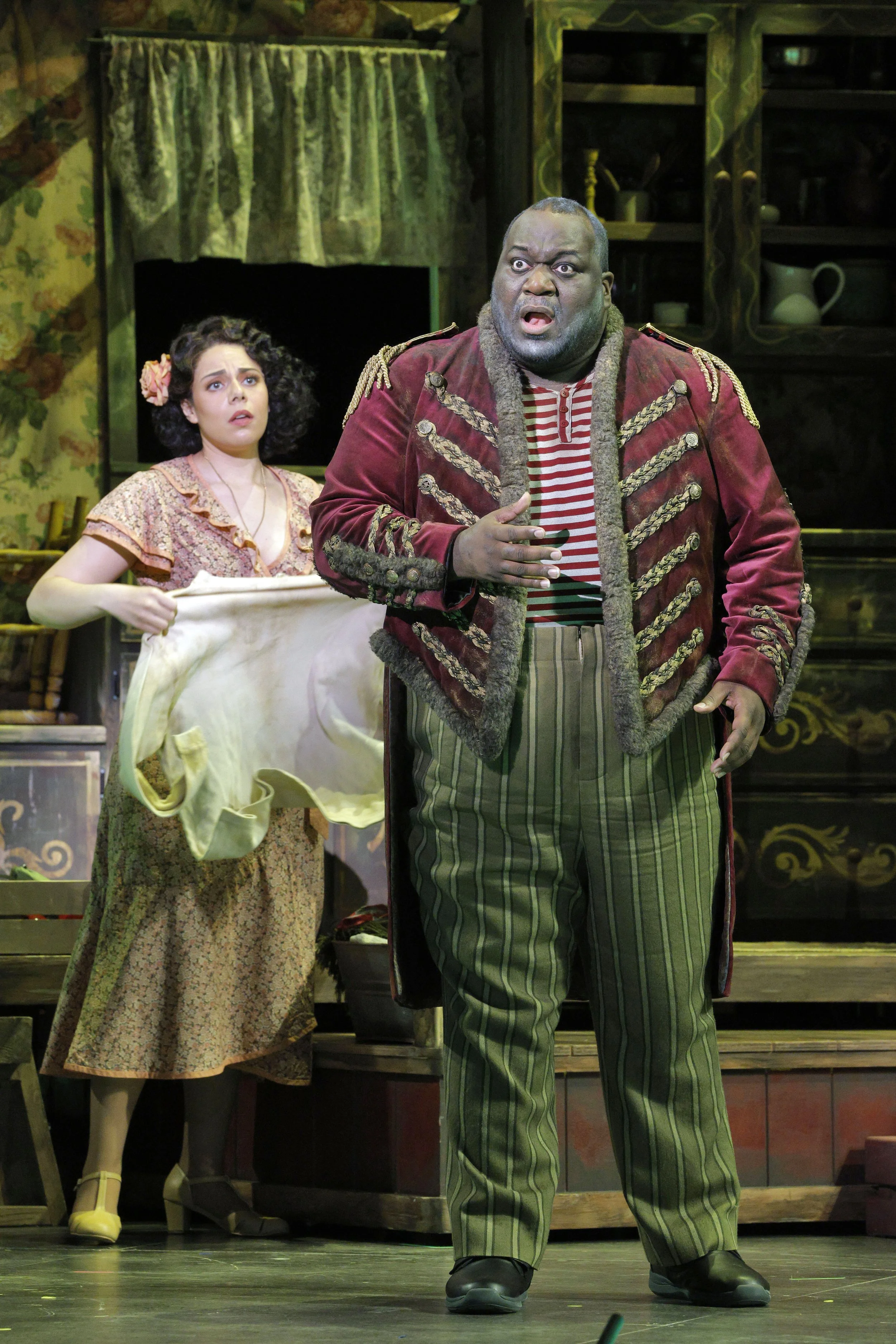
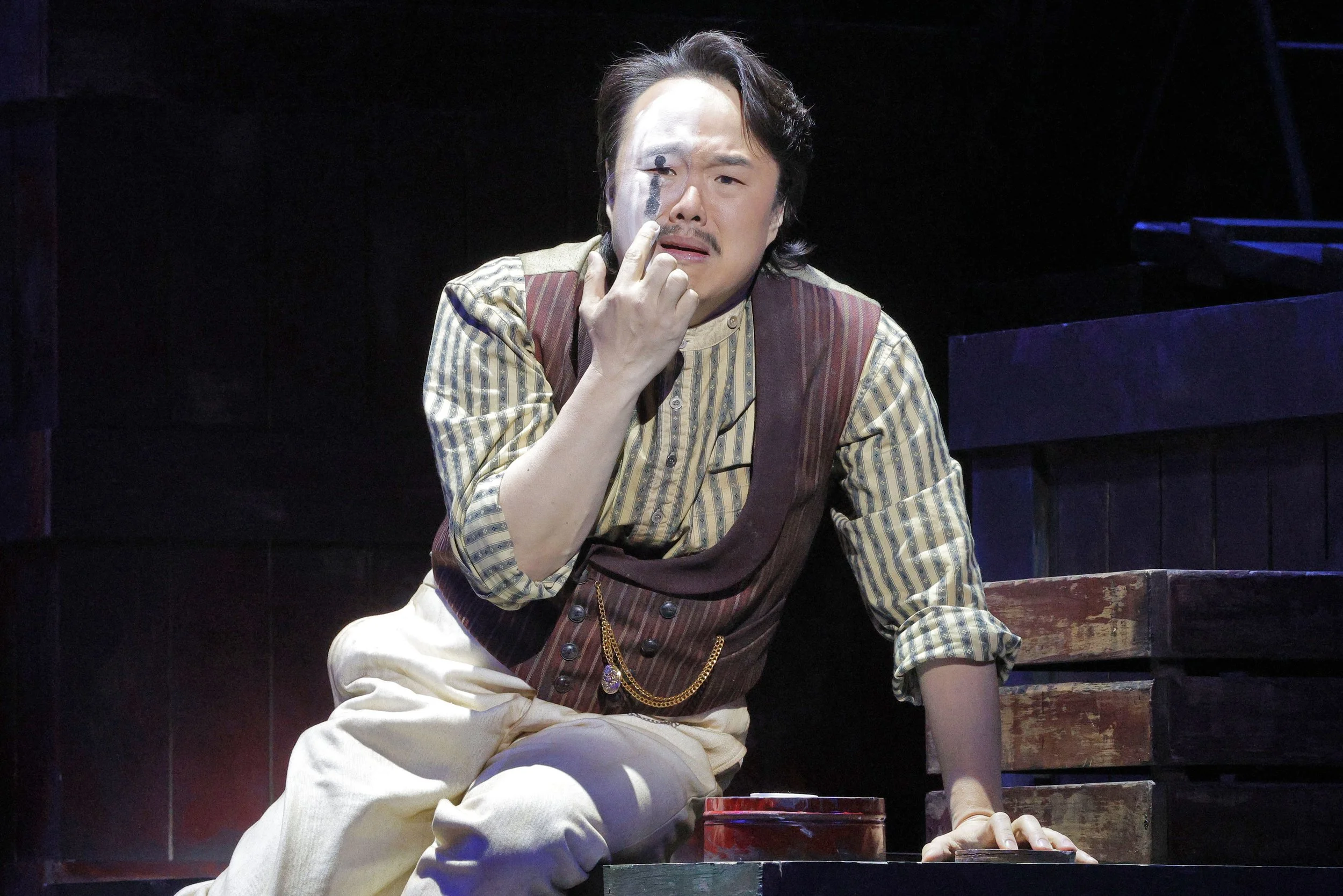
Then came one of the most, if not the most popular song,Vesti la giubba, and everything else in the night seemed to reorganize around it.
Watching Canio process the full weight of his betrayal in real time, hearing the trembling and cracking in Won Whi Choi's voice as the composure fell apart, and then watching him begin to paint his own face live onstage was nothing short of shocking. Smearing the clown makeup across himself in this frantic, almost dissociative way, it stopped being a vocal performance and became something raw, and I am still in awe of how Choi was able to give off such sorrow and anger all at once. The lighting had slowly gone cold and blue somewhere along the way without anyone noticing as well, adding to this. At the end, the silence after the aria was total. Then the applause hit, and it was enormous. Even knowing the aria going in, knowing its reputation, nothing about seeing it live was what I expected. It was just extraordinary, and i have massive respect for the depth of character Choi portrayed.
The play within the play in Act II gave the cast a chance to shift gears in a way that was genuinely fun to watch. Smith's Tonio, in full clown mode, with wide, exaggerated eyes and movements pushed to the edge of slapstick, was a complete transformation from the still, calculating man of the first act. Harlequin's long banjo swinging side to side got real laughs as well, and the actual Comica inside the play was fun to watch. The physical comedy leaned into the slapstick roots of commedia dell'arte in a way that made the darkness coming feel even more jarring by contrast. The chorus was great here too, active and physical, running through the aisles, pulling the audience into the world rather than leaving us safely outside it. It was fun to realize that we had quietly become the townsfolk ourselves, watching the show within the show with the same unease and wonder of what’s real.
The ending lands the way it has to, of course, in chaos and silence and with the full weight of things that were already broken.. The stage violence was precisely choreographed and completely convincing. Canio, grabbing at Nedda's hair, the physical chaos of the confrontation, Nedda's expressions in those final moments, all of it had clearly been rehearsed to the point where it no longer looked rehearsed. And then the images that stayed with me on the walk back to my car after ths insanity: Canio not even looking at what he'd done. Tonio's face, solemn, something reading unmistakably as regret. And Nedda's child, watching her mother's body on the stage floor. I also could have sworn in those final seconds that Canio held the gun to his own head, which, if intentional, reframes the entire prologue in a way I'm still thinking about, and such a good unspoken additive to the end of all of this.
The audience held its breath for a minute, myself included. Then the applause came, immediate and full, building into a standing ovation that lasted a solid five minutes, beginning around Tonio's curtain call and growing from there. Each member looked rightfully proud of their spectacular performance. I still just could not believe what an amazing show they put on.
I came to this as a first-time opera attendee with a love for performance. I left giddy and a little starstruck and already looking at what Minnesota Opera has coming up next. If you love theater or musicals and have never seen an opera, honestly, just go. Pagliacci in particular, is a weirdly great entry point because of how self-aware it is about what opera even is. You'll get it immediately. This was such a fun meta show that i can’t wait to take friends to in the future.
Production Photos by Cory Weaver
